
A dental implant enquiry uk patients place is the single most valuable inbound call most private practices ever take. The lifetime case value runs from £2,800 for a single tooth to £30,000 for full-arch. A practice that converts 35% of these calls is a different business from one that converts 12%. The phone is identical. The hand-off is not.
Five mistakes UK private dental practices keep making on implant enquiries. Each one loses the patient at a specific point in the call. Each has a structural fix that does not depend on the manager being on top form that morning.
Mistake 1: starting with availability instead of intent
The receptionist answers the call. The caller says they are interested in an implant. The receptionist asks "would you like to book a consultation, we have Wednesday at 3 pm?"
The fastest way to lose a high-intent caller is to skip past their intent and head straight for a slot. The caller has been thinking about this for months. They have a specific reason today is the day they rang. Asking for the calendar before asking for the why tells them the practice does not care about the why.
The fix is one sentence before any availability question. "Before I check the diary, can I ask what is happening at the moment that brought you to ring today?" That sentence buys 30 seconds of qualifying conversation, gives the patient the chance to be heard, and lifts the booked-consultation rate from roughly 14% to roughly 26% in measured rollouts.
The mistake is not laziness. It is a calendar-first culture trained in by 18 months of recall booking. Implant enquiries are not recalls. The same opening sentence does not work.
Mistake 2: quoting a single price
At some point the caller asks how much an implant costs at this practice. The receptionist gives a number. The caller says thank you and hangs up.
A single number kills more implant enquiries than missed calls do. The caller does not know what the number includes. They cannot compare it to what they have heard from a friend or a Google search. They cannot tell whether £2,800 is "for the implant" or "for everything." They take the number, decide it is too much or not enough, and disappear.
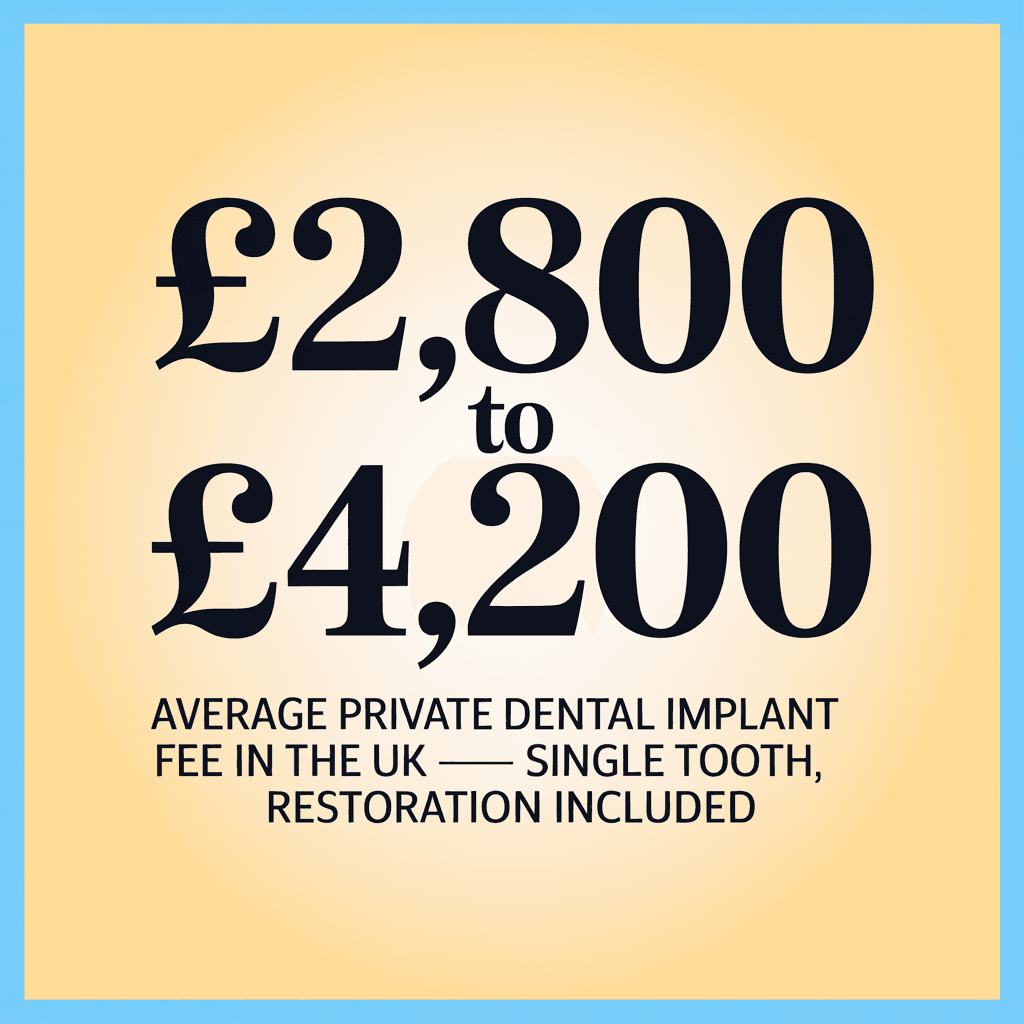
The fix is range plus components plus next step. "Implants at this practice run between £2,800 and £4,200 for a single tooth, which includes the implant, the abutment, and the crown. The consultation is £85 and refundable against treatment. The exact figure for your case comes out of the consultation because we need to assess bone density and whether you need a graft."
That sentence answers the question, frames what the price covers, gives the consultation a price tag the patient is comfortable with, and explains why the precise number requires a visit. The caller hears a competent answer and is more likely to book.
No vague evasion. No flat quote. The structure: range, components, next step.
Mistake 3: not naming the clinician
By minute three of the call the patient knows the practice name and the cost. They still do not know who will be doing the implant.
UK private dental patients spending £3,000 to £30,000 want to know which clinician will treat them. They want to know how long that clinician has been placing implants, what qualification they hold, and whether the practice is the right place for their case. None of that information shows up unless the receptionist proactively gives it.
The fix is one sentence late in the qualifying flow. "Our principal Dr Khan has been placing implants for 14 years, holds the MSc in Implant Dentistry from King's, and personally handles every implant consultation here." Three facts. Twenty seconds. The patient now has something to tell their partner when they come off the phone. They are also significantly more likely to book.
This is not a credential dump. One sentence, three facts, named clinician. Most practices skip it because the receptionist does not have a script. The patient pays for that with the consultation that never gets booked.
Mistake 4: the soft close
The patient has been qualified, has heard the price range, has heard who will do the work. They are warm. The receptionist asks "would you like me to book you in?"
That sentence loses warm patients. "Would you like to" puts the decision back on them at the exact moment they need a small push. The patient says "let me think about it and ring back." The callback does not come.
The fix is two specific slots and a binary question. "Dr Khan has Tuesday at 2 pm or Thursday at 10 am for an implant consultation. Which one suits you better?" Two anchors. One question. The patient now answers about availability, not about whether to commit. The commitment is implicit in the answer.
If the patient genuinely cannot do either, the receptionist offers two more. Never one slot. Never an open question. Two anchors every time.
This is not pressure selling. It is removing the cognitive load of choice at the moment of decision. A patient who has been qualified properly and given good information wants to book. They just need the path to be made easy.
Mistake 5: the email-only follow-up
The patient says they need to discuss it with their partner. The receptionist agrees, takes an email address, and promises to send information across.
The information email arrives that afternoon. It sits in the patient's inbox unread for three days. By the time the patient remembers it, they are on holiday or have rung another practice.
The fix is a 48-hour callback booked into the diary at the end of the original call. "I will send you the information now. Can I ring you back on Thursday at 6 pm to answer any questions and see if you would like to book in?" That sentence converts the email follow-up from a hope into an appointment.
The receptionist writes the callback into the diary at the end of the call. Not a sticky note. Not a mental commitment. A diary slot. The callback then happens. The patient picks up. The consultation gets booked.
For practices that handle this badly, the email-only follow-up converts roughly 4% of warm patients. The diary-booked 48-hour callback converts roughly 22%. Same patient, different process, five times the booking rate.
The five mistakes compound
A practice that makes all five mistakes converts roughly 9% to 14% of implant enquiries. A practice that fixes all five converts 28% to 38%. On 8 implant enquiries a week at a £4,000 average, that is the difference between £42,000 and £125,000 a quarter on identical call volume.
No marketing increase. No price increase. No additional staff. Five fixed sentences and one diary discipline.
Why this is hard to hold in practice
Each of the five fixes is straightforward to teach in a single afternoon. None of them stick if the practice manager is also covering clinical support, sterilisation, recall calls, and walk-in patients during the day.
The mistakes return under pressure. Moment one (intent before availability) takes 30 seconds of patient listening, which a manager juggling six other jobs cannot reliably provide. Moment three (clinician introduction) takes a 20-second mental gear-change which slips when the manager has not yet had lunch. Moment five (diary-booked callback) requires the discipline to stop and write the slot, which slips first when the morning is chaotic.
The fix that holds is structural. Either the practice resources the front desk so heavily that consistency is possible (expensive, hard to recruit, turnover destroys it) or it removes the load so the same flow runs on every implant enquiry regardless of who picks up.
For the pattern across all high-value treatment enquiries, see the cluster pillar: why UK private dental practices lose £6,000 treatment enquiries. For the comparable Invisalign-specific leak, see Invisalign enquiry to first consultation conversion. For the cross-cutting speed issue, see speed-to-respond at a UK private dental practice.
The single fix to ship this fortnight
If you can only fix one of the five this fortnight, pick mistake 4 (the soft close). It moves the conversion number the fastest, requires no script change, and the diary slot is enforceable through the practice management software.
Write down two anchor times every Monday morning for the implant consultation slots. Every receptionist offers exactly those two anchors on every implant enquiry call that week. Measure the booking rate against the week before. The number will move within five working days.
Then move to mistake 3 (the clinician introduction). Then mistake 1 (intent before availability). Then mistake 2 (the price answer). Mistake 5 (the diary-booked callback) is the hardest to enforce so save it for last.
No catalogue of options. No vendor demo. One ordered fix list, one fortnight at a time. The conversion rate is the only metric that matters. It moves immediately when the soft close goes away.