
The honest version of this comparison is not the one most vendor websites want to publish. So here it is, written from the operator side, not the vendor side.
An AI receptionist for a dental practice does not replace your practice manager. It covers the calls your practice manager cannot. That distinction is the only one that matters when you decide whether to spend money on one.
This is the comparison for the principal dentist or practice owner weighing up a second front-desk hire, an outsourced answering service, or an AI voice receptionist. By the end you will know which of those three to choose for your private practice.
The honest framing
A private dental practice does not lose calls because the practice manager is bad at the phone. It loses calls because the practice manager is doing six other jobs at the same time.
A typical private practice manager day, observed:
- 30 to 45 minutes on the phone with patients
- 60 to 90 minutes in clinic supporting the dentist
- 40 to 60 minutes on lab work, sterilisation logistics, and stock
- 30 minutes on insurance and finance plan admin
- 25 minutes on patient correspondence and follow-up
- 20 minutes on team coordination
- The rest in micro-interruptions
Somewhere in those eight to nine hours, the phone rings 60 to 120 times. Most of those calls land when the manager is mid-task.
A second receptionist solves it. So does an outsourced answering service. So does an AI voice receptionist. The question is which solves it at what cost, and which trade-offs you accept.
Option 1: Hire a second front-desk team member
Cost:
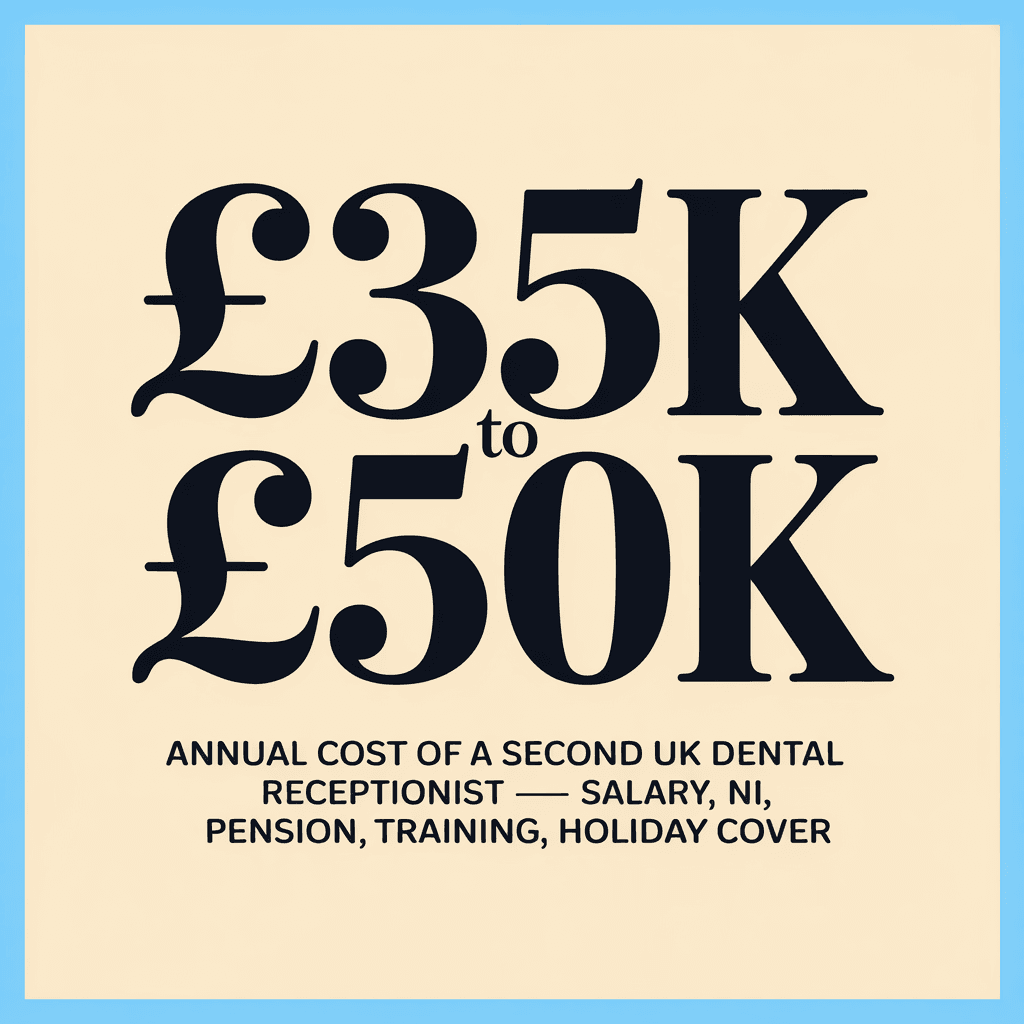
- private practice front-desk salary: £24,000 to £32,000 depending on region and experience
- Employer NI, pension, training, holiday cover: add roughly 22%
- All-in annual cost: £29,000 to £39,000
- Recruitment cost on top: typically £1,500 to £3,500
Coverage:
- 40 hours a week, minus holidays, training days, sick leave, and notice periods
- Net working coverage: roughly 1,700 hours per year
- Outside working hours: zero coverage
- During peak periods: still one person at one time, queueing returns
Where this wins: complex patient conversations, treatment plan negotiation, complaints and clinical concerns, high-trust new-patient onboarding, day-to-day team relationship with the rest of the practice.
Where this loses: cost per answered call is the highest of the three options, coverage stops at the end of the shift, unplanned absences leave the practice in the same place it started, and the new hire is typically six months from being fully effective on the phone.
Option 2: Outsource to a dental answering service
Cost:
- Setup: £200 to £800
- Per-minute pricing, typically £0.85 to £1.40 per minute
- For an average UK practice (300 inbound minutes per month outside core hours): roughly £255 to £420 per month
- For peak season or larger practices: £600 to £1,200 per month is common
- Pricing scales unpredictably with call volume
Coverage: 24/7 in most cases. Quality varies dramatically by provider. Agents are usually not dental-trained. Practice management system integration is rare; most leave a manual callback note.
Where this wins: genuine 24/7 coverage including bank holidays, no employment overhead, useful for emergency-only out-of-hours coverage.
Where this loses: cost rises with call volume, which is exactly when you can least afford it. Agents read from a generic script. Callers can tell. Bookings rarely make it into the practice management system without manual re-entry. Patient experience is uneven.
For a deeper look at this specific option, see: dental answering service vs AI voice receptionist.
Option 3: AI voice receptionist
Cost: flat monthly rate, typically £450 to £900 for a single-site private practice. Includes integration with Dentally, SOE, R4, or Carestream. Includes after-hours, weekend, and bank holiday cover at the same price. No per-minute scaling.
Coverage: 24/7 including peak periods. Unlimited simultaneous calls. Answers in under three seconds. Books straight into the practice management system. Sends confirmation by text and email. Logs every call, including the ones the team missed.
Where this wins: the 22% to 45% of calls a manager would have missed, the 6 pm to 8 am window where calls would have gone to voicemail, weekend new-patient enquiries that would have gone to a competitor by Monday, peak season weeks when call volume doubles overnight, practices losing more than 15 calls a week.
Where this loses: complex complaints. Send to the manager. Detailed clinical questions outside standard scope. Send to the manager. The relationship-building part of a long-standing patient phoning to chat. Manager handles. Treatment plan negotiations. Manager.
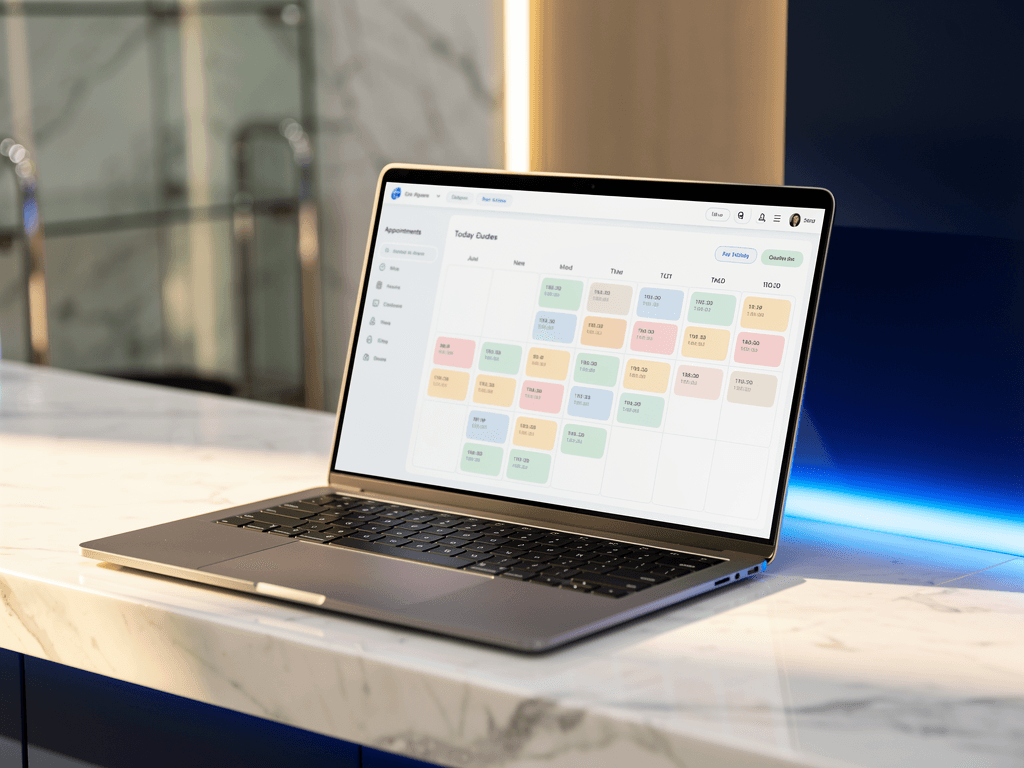
What happens when you compare them on real numbers
For a private practice losing 18 calls a week, with an average new-patient lifetime value of £2,300:
Status quo: roughly £40,000 plus of inbound enquiries leaking, of which a fraction would have converted. Assume conservatively 15% would have become patients. That is £124,200 of recoverable lifetime value sitting in the missed-call list per year. (Full maths: what a missed call costs a private dental practice.)
Second hire: recovers most of the calls during working hours, recovers none outside working hours, costs £29,000 to £39,000 plus recruitment. Net contribution after the salary cost is positive but lower than expected because outside-hours calls still leak.
Outsourced service: recovers most of the calls but at uneven quality. Bookings land in a callback queue, not the calendar. New patients drop off between the answering service and the manager calling back.
AI voice receptionist: recovers most of the calls inside and outside hours, books straight into the calendar, costs roughly £5,400 to £10,800 a year. The cost difference against a hire is funded by the third recovered new patient per year.
The right answer for most private practices
If your practice loses fewer than 8 calls a week and the manager has light clinical-support duties, you do not need any of these. No second hire. No outsource. No AI. Just measure for a month and re-decide.
If your practice loses 8 to 20 calls a week, the AI voice receptionist beats the second hire on cost-per-recovered-call and on out-of-hours coverage. The manager keeps the relationship-heavy work.
If your practice loses more than 20 calls a week, you almost certainly need both. AI catches the volume and the after-hours calls. A second person catches the complex conversations the AI sends through.
The decision is not "AI or human." It is "where does each one earn its keep."
What to ask any AI receptionist vendor before you sign
Five questions that cut through marketing copy.
- Does it write the booking directly into Dentally, SOE, R4, or Carestream, or does it leave a callback note? Callback notes are still missed calls with extra steps.
- What happens when a caller refuses to speak to AI? The honest answer is "it transfers to a real person." If the answer is "it does not happen," walk away.
- What is the cost in month 13 if my call volume doubles? Flat rate or scaled? Find out before you sign, not after.
- What does the call log look like at the end of each day? If you cannot see every call, you cannot manage it.
- What is the typical setup time for a private practice, end to end? Anything over four weeks is a flag.
If the vendor cannot answer the five questions in plain language, they are not the right vendor.
When AI is the wrong answer
No tool is right for every practice. There are three cases where the AI receptionist is genuinely not the move.
No call volume. A practice receiving fewer than 40 inbound calls a week with a missed-call rate under 10% does not have enough leak to fund the tool. Spend the £450 a month on a second hygienist day or a marketing campaign instead.
No software the AI can talk to. Practices still on paper diaries or a closed legacy system with no API cannot get the booking-into-the-diary benefit. The AI can answer and take a message; for that you can use a cheaper answering service. Upgrade the practice management system first, then revisit.
No appetite for the team to share the phone. The AI works best when the team is comfortable letting it pick up after three rings. Practices where the manager treats every incoming call as personal turf will sabotage the tool inside a month. The fix is not the tool. The fix is the conversation with the manager about what their highest-value work actually is.
For the cost maths that decides whether the practice is in the first group or the second, see: what a missed call costs a private dental practice. For where this fits in the wider 2027 adoption picture, see: 78% of private dental practices use AI.