
The way most UK private practices try to reduce dental no-shows is a single reminder text the day before. It helps a little. It also treats the patient who never misses and the patient who has cancelled twice as exactly the same person, which is why the chair still sits empty often enough to hurt.
A no-show is not bad luck. It is a slot you could have predicted and a reschedule you could have closed. This is the operational version of fixing it: score the risk, then run a cadence that actually recovers the chair, with the part that does the talking handled for you.
No theory. Numbers, a cadence you can copy, and an honest note on when this is not worth the spend.
What a no-show actually costs
The soft way to describe a no-show is "the patient did not turn up." The useful way is to price the empty chair.
In a private practice, a clinical chair hour is worth somewhere around £180 to £260 once you account for the clinician, the room, and the overhead that runs whether a patient is in it or not. A 30-minute slot that no-shows with no replacement is roughly £90 to £130 gone, and it does not come back. Stack a handful of those across a week and the number gets serious fast.
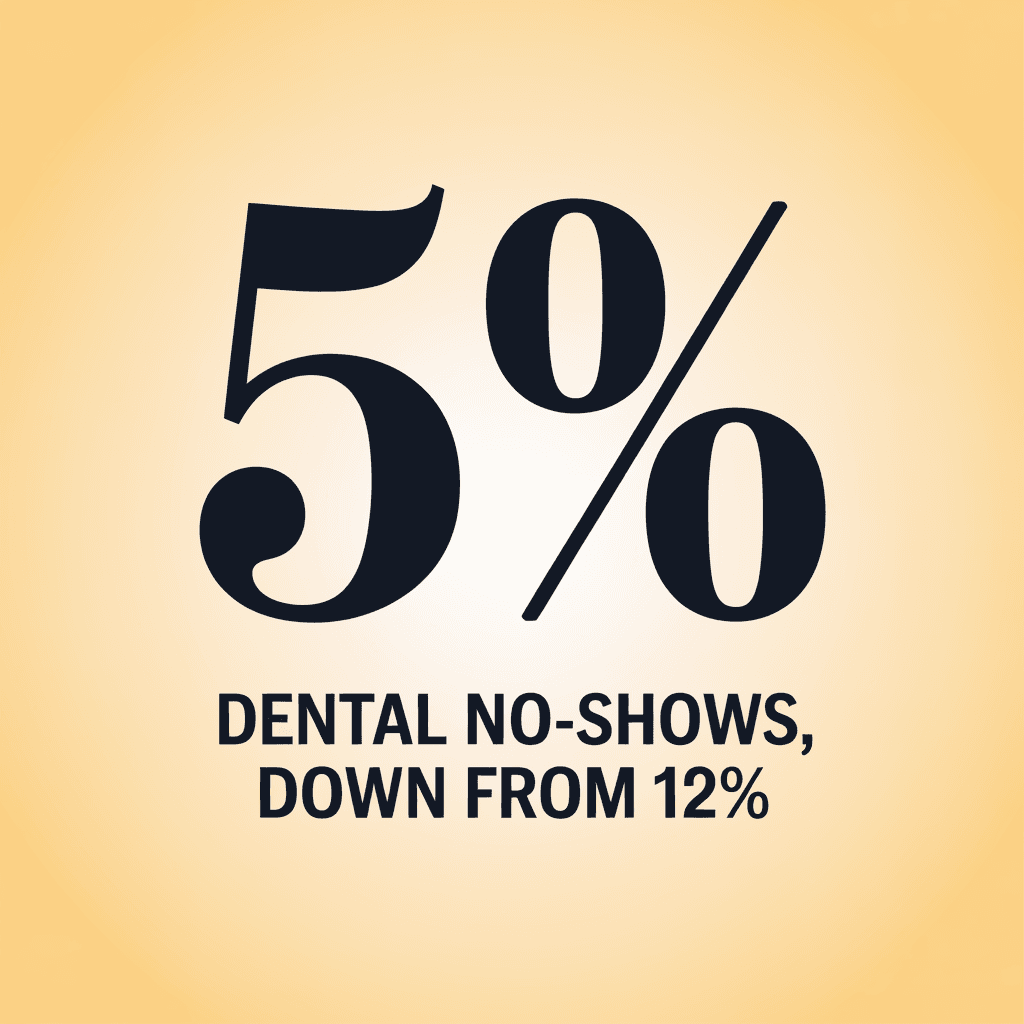
In the practices we work with, no-show and late-cancellation rates sit in the 8% to 12% range before anyone tackles them deliberately. With a risk-tiered approach, that typically falls to 4% to 6%. On a busy book, halving the rate is the difference between a comfortable week and a frustrating one, and it costs far less to fix than to tolerate.
The recoverable money is real, it is measurable, and it is sitting in your appointment book right now. The only question is whether you go after it by guesswork or by system.
Failed appointments are also only one of four places a practice quietly leaks money. The others are dormant patients, treatment that was presented and never accepted, and chair time that was never sold. If you want the combined figure rather than the no-show one on its own, the leak scorecard at Denticula estimates all four from eight numbers out of your practice management software, in the browser, with every assumption shown on screen.
Why one reminder text treats every patient the same
A flat 24-hour reminder is better than nothing. Its flaw is that it assumes every appointment carries the same risk, and it does not.
The patient who has attended on time for three years and the patient who booked last week, has cancelled once already, and is coming in for a slot they were lukewarm about, are not the same bet. Sending them the identical single text and hoping is not a plan. It is a coin toss with your chair time.
The patients who actually no-show tend to share signals: a history of past cancellations or late arrivals, a long gap since their last visit, a long lead time between booking and the appointment, and certain appointment types that simply attract more drift. None of that is hidden. It is all in your practice management system. The flat reminder just ignores it.
No reminder is wasted on the low-risk patient who was always going to come. No extra effort reaches the high-risk patient who needed a real conversation. No wonder the chair still sits empty more than it should.
How predictive scoring works
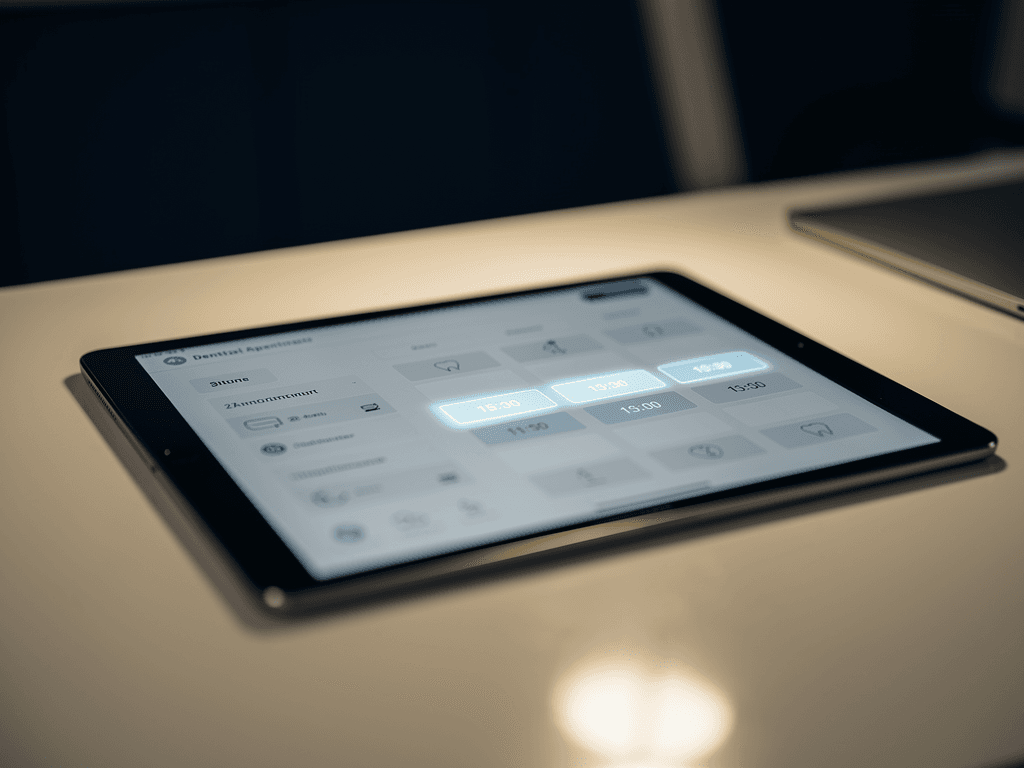
Predictive scoring is less mysterious than it sounds. It reads the same signals a sharp practice manager would notice, applies them to every upcoming appointment, and sorts the book by risk so your effort goes where it changes the outcome.
In plain terms, each appointment gets a low, medium, or high risk label based on factors like:
- past cancellation and late-arrival history
- how long since the patient last attended
- the gap between the booking date and the appointment
- the appointment type and time of day
- whether the patient is new or established
The point is not a clever label. The point is what you do with it. A low-risk slot needs nothing more than the standard reminder. A high-risk slot needs a real touch, ideally a short conversation, well before the day. Scoring is what tells you which is which without a human reading the whole diary every morning. It is one of the six operational uses covered in how private dental practices use AI in 2026.
The confirm-and-reschedule cadence that recovers the chair
Here is the cadence itself. This is the part you can copy.
Low risk. Standard reminder 24 hours out by text. Nothing else needed. Most of your book sits here, and over-contacting these patients only annoys them.
Medium risk. A reminder 48 hours out as well as the 24-hour one, with a clear, friction-free way to reschedule built into the message. The goal is to surface a wobble early, while there is still time to fill the slot from a waiting list.
High risk. A confirmation call 24 to 48 hours out. Not a text. A call, because the high-risk patient is the one who quietly intends not to come and will ignore a text. The call does one job: confirm, or reschedule on the spot into a slot that suits them better. A rescheduled appointment is a kept appointment. A silent no-show is a dead chair.
The reschedule is the whole game. A patient who is wavering does not need a guilt-trip. They need it to be effortless to move to a time they will actually attend. Done well, this is also the moment you backfill the original slot from your short-notice list. For the wider system this plugs into, see the 2026 playbook for never missing a new patient enquiry.
Where the AI receptionist runs the layer
A cadence is only as good as the person with time to run it, and in most single-desk practices nobody has that time. This is where the AI dental receptionist earns its place.
The score flags the high-risk slots. The AI makes the confirmation calls, including the evening and weekend windows when patients are actually reachable, which a daytime front desk never gets to. When a patient says "actually, I need to move it," the AI handles the reschedule live, finds the next suitable slot, books it into Dentally, SOE Exact, R4, or Kodak, and confirms by text and email. It does not leave a callback note for someone to chase tomorrow.
That last point matters more than it looks. Hiya found that 80% of callers sent to voicemail never leave a message, so a reschedule that depends on the patient calling back, or a note that depends on staff calling out, leaks at both ends. The value is not the score. Plenty of tools sell a score. The value is the call layer that turns a risk flag into a rebooked slot without anyone at the practice picking up the phone. The same after-hours reach is why practices lose so many enquiries in the first place, covered in why practices lose patients after hours.
When predictive scoring is the wrong spend
No tool is right for every practice, and this one has clear cases where it does not pay.
A small book. A practice running fewer than roughly 40 appointments a week with a no-show rate already under 5% does not have enough leak to fund a scoring-and-call layer. Tighten your single reminder, take deposits on high-value new-patient slots, and revisit later.
A paper diary or a closed system the tool cannot read. Scoring needs the appointment history. No history feed, no score. Sort the software first.
A book that is mostly long-standing, reliable patients. If your no-shows are genuinely rare and random rather than patterned, the cadence has little to grab onto. Spend the money on filling chairs, not on chasing a 4% that is already low.
Standalone scoring tools run roughly £120 to £300 a month, and the call layer is usually bundled into the receptionist. The maths is simple: if the system recovers two or three chair hours a week that would otherwise have sat empty, it has already paid for itself, and most busy private books recover far more than that.
Reducing no-shows is not about nagging patients harder. It is about spending your limited front-desk attention on the slots that are actually at risk, and making the reschedule so easy that a wavering patient moves instead of vanishing. Score the risk, run the cadence, let the calls happen even when the desk is closed, and the empty chairs get rare.