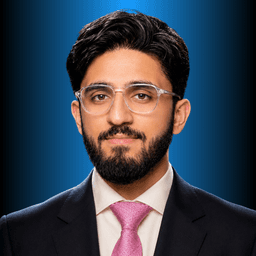
This post is mine, written in the first person, because the show is the kind of thing that needs an honest origin story before it asks any practice owner to trust it with theirs. I am Moiz Khurram, host of Between Patients. I am the fourth generation of dental practice owners in my family. I did not become a dentist. I built a software company that serves dental practices, and now I run a podcast for the people who run them. Those two facts are connected. The rest of this post explains how.
What four generations of dental practice ownership looks like up close
For most people, dentistry is something that happens to them twice a year. For some families, it is a thing that runs through the kitchen. Mine is the second kind.
I grew up around the practice. Not in the chair, in the waiting room and at the kitchen table afterwards. The conversations I overheard as a child were not about technique. They were about people. About the receptionist who had been there for fifteen years and was thinking of moving on. About the equipment supplier who had just put the price of a chair up by 18%. About the patient who had been with the practice since the doors first opened. About the cashflow at the end of the quarter.
Those conversations stayed with me. Years later, when I started looking at the dental podcast landscape with a producer's eye, I noticed that almost none of those conversations were on the record anywhere. There are hundreds of podcasts about technique. There are dozens about marketing. There are a handful about business operations. There is almost nothing about the conversations practice owners actually have at the kitchen table at the end of the day. That gap is the show.
I covered the broader thinking on the gap and what we built to fill it in our overview post on Between Patients. The personal version is what follows.
Dr. Khizar Hayat: two practices, the foundation
The lineage of dental practice ownership in my family starts with my great-grandfather, Dr. Khizar Hayat. He ran two practices. By the standards of his generation, this was an unusual undertaking. By the standards of any generation, running two practices that worked was difficult.
I never met him. The version of him I know is the version that came down through my grandfather and my father. The thing I learned from that version is that operational discipline at the practice level is something you carry with you, and something that gets passed down whether or not it is taught explicitly. My great-grandfather built the foundation by demonstrating that a clinician could also be an operator. That was not obvious in his lifetime. It is not entirely obvious now.
The reason I bring him up first in this post is that the show is in some sense an attempt to record at scale the kind of operational wisdom that, in my family, only got passed down because the people in the family kept talking to each other about practice. Most practice owners do not have a dental family at home. Most practice owners have figured out the operational side largely on their own. The show is for them.
Dr. Muhammad Saleem Akhter: Makkah Dental Clinic, 1993 to 2018
My grandfather is Dr. Muhammad Saleem Akhter. He built Makkah Dental Clinic, opened it in 1993, ran it for 25 years, and sold the practice in 2018. That is a complete arc. Most practice owners never get to see the full arc of a practice from setup to exit play out around them. I did.
What I learned by being close to that arc, in chronological order, is roughly this. The first three years are not about the dentistry. The first three years are about the systems, the rota, the patient acquisition, the rent, the supplier relationships, and the slow process of turning a building into a practice. The middle ten years are about retention. Of patients, of staff, and of your own attention. The final five years are about the question of what comes next, which is partly a question about you and partly a question about the practice as an asset.
He did not get every decision right. No practice owner who runs a single building for 25 years gets every decision right. The decisions he got right tended to be the ones that prioritised the long arc of the practice over the short. The decisions he got wrong tended to be the ones where he held on too long, either to a member of staff who had stopped pulling their weight or to a piece of equipment that needed replacing two years before he replaced it. Those are not unique mistakes. They are the mistakes of running a small business with people in it.
The reason this matters for the show is that the conversation I most wish someone had recorded with my grandfather was not the conversation about technique. It was the conversation about how he made the decision to sell, when he made it, and what he wishes he had known a year earlier. That conversation, with the right host, would have been useful to thousands of practice owners. It was not recorded. So we are recording the equivalent now, with other owners, while they still have the time to sit down for a 30-minute conversation. The format and the deliverables of that conversation are covered in our deliverables breakdown.
The questions I wish someone had recorded my grandfather answering
I have a short list of questions that I wish I could go back and ask. They are the questions that, looking back at the arc of the practice from 1993 to 2018, would have surfaced the most useful operational lessons. I am writing them down here because they are also the rough shape of the conversation the show tries to have with every guest.
How did you decide when to put the second chair in. How did you decide when to put the third. What did you do the first time a long-serving receptionist quit, and what would you have done differently the second time. How did the patient mix change after the first five years, and how much of that change was deliberate. What was the slowest you let a problem run before you fixed it, and what did it cost. What did you do when the cashflow was bad. What did you say to your staff when the cashflow was bad. When did you start thinking about an exit, and what made you start thinking about it. Who did you talk to first, and what did they tell you.
None of those questions has a clean answer in a thirty-second clip. All of them have a useful answer in a 30-minute conversation. We record the 30-minute version with practice owners who are still in the middle of the arc, while the answers are still fresh. The full criteria for who gets invited to that conversation are in our criteria post.
Why we record these conversations now
The reason we are doing this now, rather than waiting, is partly that the production tools have caught up to the editorial standard we wanted. A 30-minute podcast episode that converts into a full asset pack with a 10 day turnaround was not a small undertaking five years ago. It is a manageable undertaking today. The producer behind the show is SelenicAI, the software company I run, and the production team there is set up to handle this volume without dropping the editorial bar.
The other reason we are doing this now is more personal. I think the people running dental practices today are doing some of the most operationally interesting work in the country, and almost none of it is on the record. The trade press covers acquisitions and openings and the occasional human-interest story. The clinical journals cover technique. The marketing podcasts cover funnels. The conversation that nobody is having on the record is the conversation practice owners actually have with each other. That is the conversation we are trying to record.
The show is called Between Patients because that is where the conversations actually happen. Not in the chair. Not at the end of the day. In the small windows between patients, when a member of staff has stepped away and the practice owner has a moment to think. We named the show after that window because that is the headspace the show is trying to capture.
If your practice is in the middle of its arc and you have built something specific, you are the kind of practice owner the show was designed for. The application is on the landing page. Three short steps, around three minutes to complete. We respond to every application within 48 hours. By invitation, no fee, no agenda. You can hear the trailer, which runs 43 seconds, on the Between Patients landing page.
If you have a conversation worth recording, we would like to record it.